
Solar Powered Boat: The Complete 2026 Guide to How They Work, What They Cost, and Whether One Is Right for You
A decade ago, a solar-powered boat was a curiosity. The MS Tûranor PlanetSolar circumnavigated the globe on sunlight alone back in 2012, and most people treated it as a one-off engineering stunt rather than the start of an industry. That has changed. Solar-electric propulsion is now a serious category, with builders ranging from small workshop operations to established yacht manufacturers putting panels on the roof and batteries under the deck.
This guide covers what a solar-powered boat actually is, how the technology works in practice, what it costs to buy or convert one, how far you can realistically expect to travel, and which models are worth looking at in 2026. It also covers the parts most marketing pages skip over, including the genuine limitations of relying on the sun for propulsion.
What Is a Solar Powered Boat?
A solar powered boat uses photovoltaic panels mounted on the deck, roof or canopy to generate electricity, which charges an onboard battery bank that powers an electric motor. Most solar boats are not running the motor directly from the panels in real time. The panels top up the batteries, and the batteries do the heavy lifting, which is why battery capacity matters as much as panel wattage when judging a boat’s real-world range.
There is a meaningful difference between a fully solar-electric vessel and a conventional boat with solar panels bolted on for battery maintenance. A dedicated solar boat is engineered around the power budget from the keel up: lightweight hull materials, efficient hull shapes, and a propulsion system sized to match what the panels and battery bank can realistically deliver. Retrofitted panels on a standard powerboat, by contrast, are usually there to keep the leisure battery topped up rather than to drive the boat itself.
Solar-Electric vs Solar-Assisted: Why the Distinction Matters

Boat builders use both terms loosely, which causes confusion when you are comparing models. A solar-electric boat is designed so that solar generation is the primary or sole charging source for propulsion, sized and validated for that role. A solar-assisted boat has solar panels as a supplementary trickle charge alongside shore power or a generator. If continuous, low-maintenance operation matters to you, this distinction should be one of the first questions you ask any builder.
How Do Solar Boats Actually Work?
The system has four core components: solar panels, a charge controller, a battery bank, and an electric motor. Sunlight hits the panels and is converted to DC electricity. The charge controller regulates that power before it reaches the batteries, preventing overcharging and managing voltage. The battery bank stores the energy, and the electric motor draws from it to turn the propeller.
In short: solar panels charge marine batteries through a charge controller, and an electric motor draws power from those batteries to move the boat. The panels rarely power the motor directly.
This two-stage system means the battery bank, not the panel array, is usually the limiting factor on range and speed, which is why serious solar boat specifications always quote battery capacity alongside panel output.
Panel Technology in 2026
Marine solar technology has moved on considerably from the rigid, heavy panels of a decade ago. Monocrystalline panels remain the standard for fixed installations because they offer the best output per square metre, with premium cells now reaching the mid-20s in percentage efficiency. Flexible panels suit curved decks and canopies but typically sacrifice a few points of efficiency and tend to have a shorter working life than rigid panels. Bifacial panels, which capture reflected light off the water from their rear surface as well as direct sunlight from the front, are increasingly common on marine installations because that reflected light is a genuine bonus that land-based solar simply does not get.
Battery Technology
Lithium iron phosphate (LiFePO4) batteries have largely replaced lead-acid in new-build solar boats. They are lighter, accept faster charging, and tolerate far more charge cycles before degrading, which matters enormously on a vessel where weight affects both speed and efficiency. The trade-off is upfront cost, though that gap has narrowed substantially over the past few years as production has scaled.
How Far Can a Solar Powered Boat Travel?
This is the question every prospective buyer asks, and it is also the one where marketing copy and reality diverge most often. Range depends on three variables: battery capacity, hull efficiency, and how much of your cruising happens in daylight with reasonable sun exposure replenishing the batteries as you go.
A small, efficient solar-electric tender or day boat with a modest battery bank might comfortably manage several hours of cruising at displacement speeds, extended indefinitely if you are puttering along slowly enough that solar input roughly matches consumption. Push the throttle for speed and you draw down the battery far faster than the panels can replace it, exactly as you would expect from a system with these limits. Larger solar-electric catamarans built specifically for sustained passage-making, including vessels capable of crossing oceans, achieve genuinely impressive range, but they do it through a combination of large panel arrays, big battery banks, very efficient hulls and patient, displacement-speed cruising rather than panels alone.
What Actually Limits Range
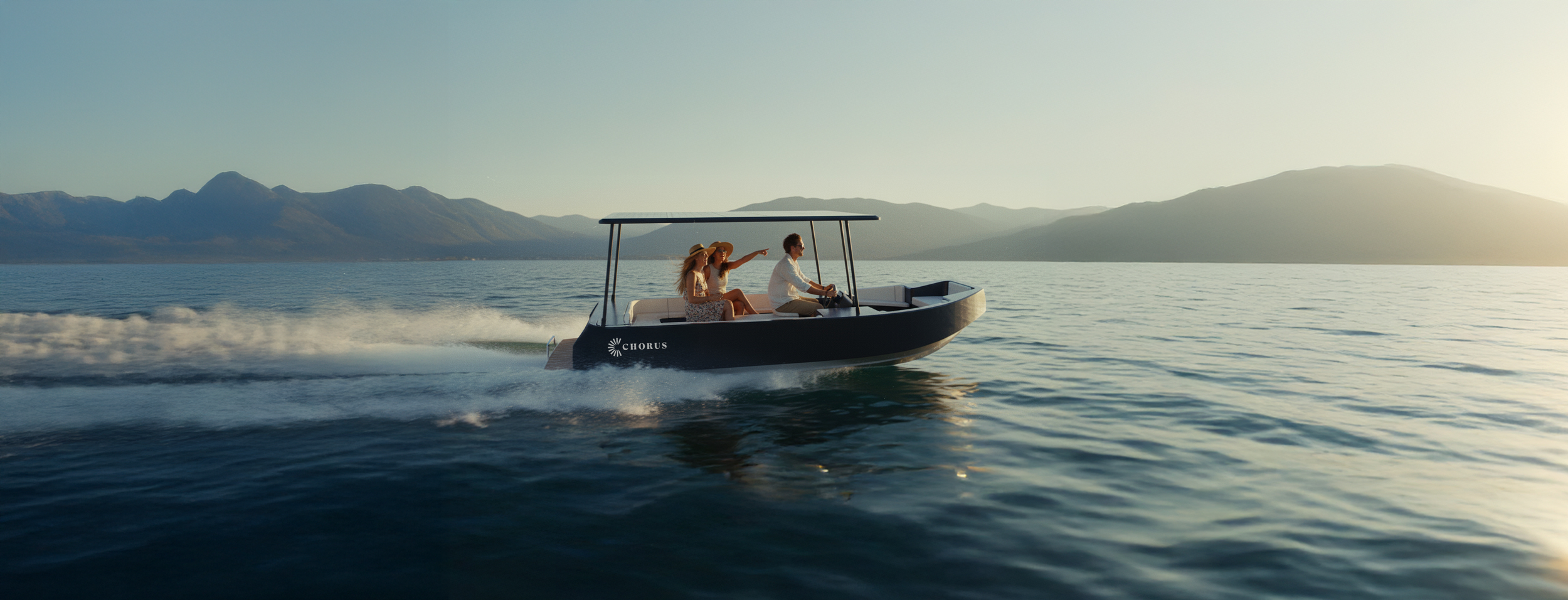
Cloud cover cuts panel output by roughly 10 to 20 percent, and light rain can drop it to 5 to 10 percent of rated capacity, which is precisely why no sensible solar boat is designed with zero backup charging option. Hull shape matters more than most buyers expect: a heavy, blunt hull with high drag will burn through battery capacity far faster than a lightweight, fine-entry hull at the same speed, which is one reason builders increasingly favour modern lightweight construction methods over traditional fibreglass moulding for solar-electric hulls. Speed has an outsized effect too, since power demand rises roughly with the cube of speed, so a small increase in throttle produces a disproportionate drop in range.
Solar Boat Costs in 2026: What You Will Actually Pay
Costs vary enormously depending on whether you are buying a finished solar-electric vessel or adding panels to an existing boat.
Adding solar panels to an existing boat for battery top-up purposes is the cheapest entry point. A basic panel and charge controller setup sized for keeping house batteries topped up typically runs from around £85 to £1,000 depending on wattage, panel type and controller quality, before installation labour. This will not propel a conventional boat, but it will reduce engine idling and generator use for house loads such as lighting, refrigeration and electronics.
A purpose-built solar-electric boat is a different category of spend entirely, closer to any other custom or semi-custom vessel, with the final figure shaped by hull size, battery capacity, fit-out level and whether the build is production or bespoke. As with any custom marine build, the propulsion and energy system is one line item among many, alongside hull construction, interior fit-out and finish quality.
If you are weighing up the investment, ask any builder for the specific battery chemistry, total kWh capacity, panel wattage and the realistic range at displacement speed in average UK summer conditions, not just peak sunshine figures. Honest builders will give you a range, not a single optimistic number.
Are Solar Boats Worth It? The Honest Trade-Offs
Solar boats are not the right answer for everyone, and a good guide should say so plainly.
Where They Make Genuine Sense

Quiet, low-speed cruising on inland waterways, lakes or sheltered coastal waters is where solar-electric propulsion shines. There is no engine noise, no diesel smell, no vibration, and on UK canals and rivers in particular, that silence is transformative for the actual experience of being on the water. Short, regular trips such as harbour transfers, private island transport or scenic day cruising also suit the technology well, since the boat has time to recharge between outings.
Where They Fall Short
If you need to maintain high cruising speeds for long periods, regardless of weather, a solar-electric system alone will struggle, and you are better served by a hybrid system or accepting that solar is a supplement rather than the sole power source. Persistently overcast climates reduce the case for solar as a primary propulsion source, though they do not eliminate it, since even a hybrid solar-electric system reduces fuel burn and emissions over a pure diesel equivalent.
Solar Boats and UK Waterways
The UK context matters if you are considering a solar-electric boat for canal, river or coastal use. The Canal & River Trust, which manages much of England and Wales’s inland waterway network, offers a boat licence discount for electric and low-carbon vessels, and has explicitly flagged solar conversion as part of its low-carbon boating push. The government’s Clean Maritime Plan has also set a target for all vessels, including those on inland waters, to have a pathway toward zero emissions by 2050, which signals the regulatory direction is firmly behind electrification rather than against it.
This matters practically. A solar-electric boat on UK inland waterways is not swimming against a regulatory tide. It is arriving slightly ahead of where policy is heading, which is a reasonable position for any boat owner thinking about resale value or long-term mooring costs.
Notable Solar Boats on the Water in 2026
A handful of vessels are worth knowing if you want context for what is achievable.
The MS Tûranor PlanetSolar, launched in 2010, remains the benchmark for what solar-electric propulsion can do at the extreme end. At 31 metres long and covered almost entirely in solar panels, it was the first vessel to circumnavigate the globe powered solely by the sun, completing the journey between 2010 and 2012. It proved the concept at a scale most builders still have not attempted.
Solar Sal Boats, a small US builder, has focused specifically on fully solar-electric passenger and cruising vessels with no shore power dependency at all, including a notable Inside Passage cruise from Bellingham to Alaska completed entirely on solar power. Their approach is a useful reference point for anyone curious about genuine off-grid solar cruising rather than solar-assisted boating.
Silent Yachts, an Italy-based builder, has taken solar-electric propulsion into the luxury catamaran space, building vessels with panel arrays integrated into the superstructure rather than bolted on as an afterthought, aimed at owners who want silent long-range cruising without sacrificing comfort.
These examples sit at different points on the spectrum, from small-scale pioneer projects to production luxury vessels, which is roughly where the wider market sits too.
Frequently Asked Questions
-
No. Engine starter batteries need a large burst of amperage in a short space of time to crank an engine, and a solar panel cannot deliver that. Solar panels charge house or propulsion battery banks, which power lights, electronics, refrigeration and, on a dedicated solar-electric boat, the propulsion motor itself. These are usually kept as separate circuits even on hybrid vessels.
-
Yes, as long as the battery bank holds sufficient charge from the day’s solar input. A solar boat is not solar-only in the sense of needing direct sunlight to move. It is solar-charged, meaning the stored energy in the batteries is what actually drives the motor, day or night.
-
Rigid monocrystalline panels in a fixed marine installation typically last in the region of 20 years or more with proper care, similar to residential solar. Flexible panels generally have a shorter practical lifespan because the laminate is more exposed to UV degradation and flexing, though quality has improved.
-
You still need the standard boat licence for the relevant waterway authority, such as the Canal & River Trust or the Environment Agency, but several authorities offer discounts for electric and low-carbon vessels, so it is worth checking directly with the licensing body for your waterway.
-
Generally slower at top speed, because battery-electric propulsion at high output drains capacity quickly and most solar-electric hulls are optimised for efficiency at modest, displacement speeds rather than outright pace. For most leisure and short-transfer use cases, this trade-off is not a practical issue, since the experience of quiet, low-vibration cruising is the point rather than top speed.
-
Output drops, typically to somewhere in the region of 10 to 20 percent of rated capacity under heavy cloud and lower still in rain, which is why any well-designed solar-electric boat has enough battery reserve to handle several consecutive overcast days without leaving you stranded.
-
Yes. Solar-electric propulsion suits commercial passenger and transfer applications well, particularly harbour transfers, eco-tourism, private island transport and short-hop ferrying, where routes are predictable, speeds are moderate, and the silent, zero-emission operation is itself a selling point to passengers.
Where Does Solar Boating Go from Here?

The trajectory is fairly clear. Panel efficiency keeps climbing, battery costs keep falling, and regulatory pressure in markets like the UK is pushing steadily toward zero-emission targets rather than away from them. None of that makes a solar powered boat the right choice for every boater tomorrow. Diesel still wins on raw range and speed where that is genuinely what you need. But for quiet inland cruising, short coastal transfers, and leisure use where the experience matters as much as the destination, solar-electric propulsion has moved from novelty to a credible, mainstream option, and that shift is likely to keep accelerating rather than slow down.
If you are weighing up a solar-electric tender, speedboat or pontoon for your own use, the right next step is to be specific about your actual use case, typical trip length and waterway, since that is what determines whether solar-electric propulsion suits you better than a hybrid or conventional alternative.
