
Electric Water Taxi: The 2026 UK Buyer's Guide to Silent, Zero-Emission Passenger Transport
A water taxi spends its working life doing the one thing a diesel engine is worst at up close: idling next to people. Marina staff breathe its exhaust at the pontoon. Guests smell fuel before they even step aboard. Wildlife in harbours and estuaries absorbs the noise and the wake every single crossing. That's the specific, unglamorous problem electric water taxis are built to solve, and in 2026 the UK market for them is moving from concept to commercial reality faster than most operators realise.
This guide covers what an electric water taxi actually is, how the leading UK-relevant options compare on real, sourced figures, what's changing in UK regulation right now, and where Chorus's own Lux fits into that picture.
What Is an Electric Water Taxi?
An electric water taxi is a passenger-carrying boat powered entirely by an electric motor and onboard battery, used for on-demand or scheduled transport across harbours, rivers, lakes or coastal routes instead of a fixed public transport timetable. Unlike a private electric speedboat, a water taxi is built around passenger capacity, boarding access and, in commercial operation, formal UK maritime certification.
The category spans a wide range of vessel types. Some, like Belfast-built Artemis Technologies' EF-12 Escape, use hydrofoil technology to lift the hull clear of the water at speed. Others, like the Uber Boat by Thames Clippers Orbit Clipper, are built for high-frequency scheduled river-bus routes rather than on-demand charter. Chorus's Lux sits in a third category: a bespoke solar-electric taxi boat purpose-built for larger passenger numbers, aimed at luxury resorts, private island transport and eco-sensitive urban ferrying.
How Is an Electric Water Taxi Different From an Electric Speedboat?

An electric water taxi is designed around carrying multiple passengers safely and comfortably on a repeatable route, while an electric speedboat is designed primarily around performance and a smaller number of occupants. That distinction matters commercially too, since any water taxi carrying fee-paying passengers in the UK falls under Maritime and Coastguard Agency passenger vessel rules rather than the private pleasure-craft rules that apply to a speedboat.
Boarding access, stability under load, and wheelchair accessibility become genuine design priorities for a taxi in a way they rarely are for a speedboat. The Artemis EF-12 Escape illustrates this directly: its side-loading door has a wheelchair-friendly aperture of 1,175mm, with an optional aft-loading configuration available for operators who need it, according to Artemis Technologies' own specification.
How Fast and How Far Can an Electric Water Taxi Travel?
Speed and range vary enormously by design, but a foiling electric water taxi like the Artemis EF-12 Escape currently sets the UK benchmark at a top speed of 30 knots and a foiling range of up to 52 nautical miles, figures confirmed by both Artemis Technologies and coverage from CompositesWorld and the Belfast Chamber.
That range figure applies specifically while foiling, meaning the hull is lifted clear of the water on the vessel's eFoiler system. As with any electric vessel, published range figures depend on load, sea state and temperature, a caveat Artemis states directly on its own EF-12 Escape specification page rather than quoting a single number without context.
Scheduled River-Bus Routes vs On-Demand Charter
Not every electric water taxi is designed for speed at all. Orbit Clipper, Uber Boat by Thames Clippers' first fully-electric ferry, is built for a fixed, high-frequency Thames route rather than point-to-point charter work, carrying up to 150 passengers and 100 bicycles per crossing, according to EV Magazine's December 2025 coverage. It's being phased into service alongside the existing vessel Twinstar and is set to become the exclusive vessel on its route by spring 2026, as part of Thames Clippers' publicly stated target of a 50 percent cut in carbon emissions by 2035 and net zero by 2050.
How Fast Can an Electric Water Taxi Charge?

Ultra-fast charging on a purpose-built electric water taxi like the Artemis EF-12 Escape brings a full charge down to under 60 minutes, according to the manufacturer, which is short enough to fit within a normal turnaround at a resort or harbour pontoon rather than requiring the vessel to be taken out of service overnight.
Charging speed for any electric water taxi depends on both the onboard charger and the shore-side power supply, which is precisely the infrastructure gap the Thames-focused Electric Thames project has been mapping. According to Marine Zero's 2025 summary of the project's Alpha phase, the initiative analysed 62 commercial vessels on the Thames, found they consume energy equivalent to around 10 million litres of diesel annually (producing 27,200 tonnes of CO2 emissions), and identified 21 riverside locations for potential electric charging infrastructure. The project is led by UK Power Networks in partnership with the Port of London Authority, LCP Delta and ev.energy, funded through Ofgem's Strategic Innovation Fund.
Is UK Passenger-Carrying Infrastructure Ready for Electric Water Taxis?
UK shore-side infrastructure for electric passenger vessels is being actively built out but remains a work in progress, with the Thames currently the most advanced UK waterway for this transition. The Port of London Authority has committed to reaching Net Zero for its own operations by 2040 or earlier, and is a formal partner in the wider Net Zero River Plan alongside vessel operators, aiming to support London Mayor Sadiq Khan's ambition for a Net Zero Carbon London by 2030.
Outside London, provision is far more localised and depends heavily on individual harbour authorities, marinas and local councils. Any operator planning to run an electric water taxi commercially should treat charging infrastructure as a site-specific question to resolve with the relevant harbour authority before committing to a vessel, not an assumption to make from a spec sheet.
What Certification Does an Electric Water Taxi Need in the UK?
A commercially operated water taxi carrying fee-paying passengers in the UK must be certified under Maritime and Coastguard Agency rules, and that framework changed significantly with effect from 12 December 2025. The MCA's new Code of Practice, The Safety of Small Vessels in Commercial Use for Sport or Pleasure, replaces the previous Blue, Yellow and Red Codes, MGN 280, and the Intended Pleasure Vessel Code with a single, consolidated standard, according to the RYA's own summary of the change.
Two details in the new Code are directly relevant to anyone researching an electric water taxi specifically. First, it applies to small vessels under 24 metres in commercial use carrying no more than 12 passengers, which is why the Artemis EF-12 Escape's 12-passenger capacity sits neatly within that threshold, while larger vessels or those carrying more passengers, potentially including a larger-capacity taxi like Lux depending on final specification, fall under different MCA frameworks. Second, and more directly useful for this guide, the RYA confirms the new Code explicitly introduces clearer provisions for alternative fuels and hybrid or electric propulsion, reflecting the fact that regulators are now designing certification with electric vessels in mind rather than retrofitting old diesel-era rules around them.
Electric Water Taxis Compared: Real Figures Side by Side
| Water Taxi | Passenger Capacity | Top Speed / Range | Charging | UK-Relevant Status |
|---|---|---|---|---|
| Artemis EF-12 Escape | Up to 12 passengers | 30 knots / up to 52nm foiling range | Full charge in under 60 mins | In production, Belfast-built, available to order |
| Orbit Clipper (Uber Boat by Thames Clippers) | 150 passengers + 100 bicycles | Scheduled river-bus service speeds (not published as a headline spec) | Shore-based electric charging infrastructure on the Thames | Phasing into service on the Thames, exclusive on its route by spring 2026 |
| ✦ Chorus Lux | Larger passenger numbers than Voltis or Helion | Not publicly specified | Solar-powered electric motors, bespoke specification | Bespoke, price and build slot on application |
Figures for the Artemis EF-12 Escape and Orbit Clipper are drawn from manufacturer specifications and independent industry coverage cited throughout this guide. Lux's published description does not currently include numeric passenger capacity, speed, range or battery figures, so these fields are marked as not publicly specified rather than estimated.
What Makes Lux Different From Other Electric Water Taxis?

Lux is Chorus's purpose-built taxi boat, designed to accommodate larger passenger numbers than the Voltis tender or Helion speedboat while keeping the same solar-electric propulsion and bespoke build approach used across the Chorus range. According to Chorus's own product description, Lux is fitted with solar-powered electric motors for smooth, silent operation across harbours, lakes or city waterways, and is positioned specifically for luxury resorts, private island transport, and eco-sensitive urban ferrying.
Where Artemis has built its water taxi story around hydrofoil performance and Thames Clippers around high-frequency scheduled transit, Chorus's approach centres on the same large-scale 3D printing and bespoke solar-electric platform used for Voltis and Helion. That manufacturing method allows flexible versioning rather than a fixed production run, meaning Lux can, in principle, be tailored in fittings and technology to a specific resort, marina or private client rather than sold as a single fixed configuration.
Solar-Electric Propulsion for Passenger Vessels
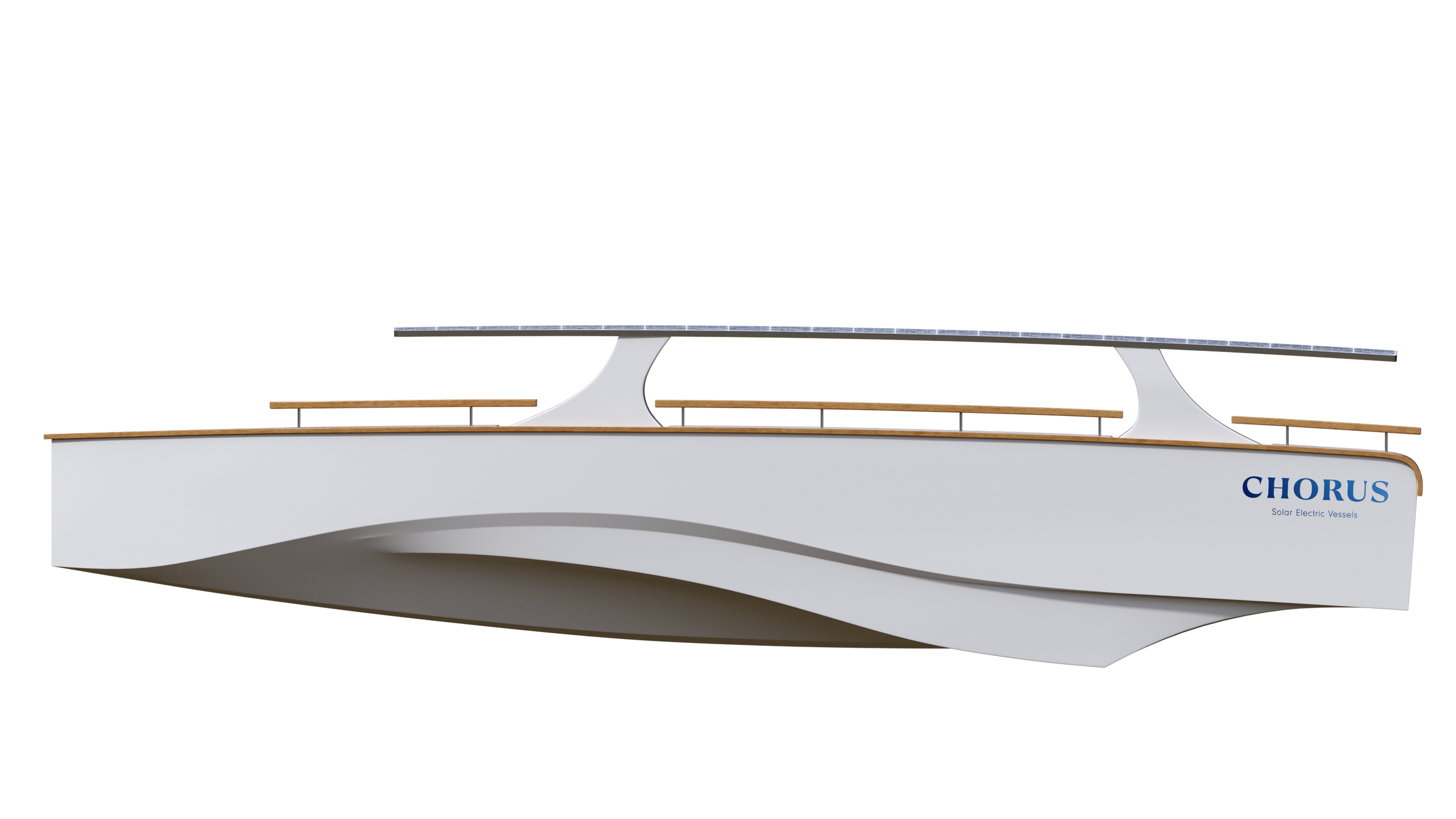
A solar-electric system extends a taxi's operating window without adding shore-charging dependency, which matters more for a passenger vessel than for private leisure craft simply because taxis spend more time in daylight service and less time sitting idle at a private mooring. The trade-off, as with any solar-assisted system, is that solar contribution depends on weather and season, so it works best as a genuine range extender and battery top-up rather than as the sole power source for a vessel running continuous, high-frequency crossings.
[H2] Frequently Asked Questions
-
Capacity varies significantly by design. The Artemis EF-12 Escape carries up to 12 passengers, the threshold that keeps it within the UK's small commercial vessel coding category, while a scheduled river ferry like Orbit Clipper carries up to 150 passengers plus 100 bicycles. Chorus's Lux is designed for larger passenger numbers than the brand's own Voltis tender or Helion speedboat, though a confirmed passenger figure isn't currently published.
-
The fastest electric water taxis, particularly foiling designs like the Artemis EF-12 Escape at 30 knots, now compete directly with mid-range diesel water taxi speeds, according to the manufacturer's own published specification. Scheduled river-bus vessels like Orbit Clipper are built for consistent crossing times rather than outright speed, so comparing them to diesel taxis on top speed alone misses the point of their design.
-
Charging time depends on both the vessel's onboard charger and the shore power available at its home mooring. The Artemis EF-12 Escape can reach a full charge in under 60 minutes using its ultrafast charging capability, according to Artemis Technologies, which is fast enough to fit within a normal daytime turnaround rather than requiring overnight charging.
-
Operators report significantly lower running costs with electric propulsion because there's no marine diesel to buy and far less mechanical servicing than a combustion engine requires. Artemis Technologies has stated its EF-12 Escape delivers up to 90 percent fuel savings alongside reduced servicing costs compared with fossil-fuel-powered equivalents, a figure the company has published in its own marketing material rather than an independently audited third-party study, so operators should request current per-route figures directly.
-
Any UK water taxi carrying fee-paying passengers commercially must be certified under Maritime and Coastguard Agency rules. From 12 December 2025, small commercial vessels under 24 metres carrying up to 12 passengers fall under the MCA's new consolidated Code of Practice, which replaced the previous Blue, Yellow and Red Codes and now includes specific provisions for hybrid and electric propulsion, according to the RYA.
-
Yes. Inland waterway operators typically work under either the relevant MCA code for sea-going vessels or a local authority's own licensing regulations, such as the Inland Waters Small Passenger Boat Code framework referenced by the RYA, and many local authorities can license vessels carrying up to 12 passengers directly. Requirements vary by waterway, so confirming with the specific navigation or harbour authority is essential before operating.
-
Yes, substantially. Electric propulsion removes the combustion engine noise and vibration that diesel water taxis produce, which manufacturers including Artemis Technologies and Chorus both cite as a core benefit for guest comfort and for reducing noise disturbance in sensitive harbour, marina and coastal environments.
Where the Electric Water Taxi Market Is Heading
The clearest signal in this category right now isn't a single vessel, it's the regulatory and infrastructure groundwork happening around electric water taxis on the Thames specifically. Between the Port of London Authority's Net Zero River Plan, the Electric Thames project's infrastructure mapping, and Uber Boat by Thames Clippers bringing Orbit Clipper into full scheduled service by spring 2026, London is positioning itself as the UK's proving ground for electric passenger vessels at scale.
The MCA's new Code of Practice, effective from December 2025 with explicit provisions for hybrid and electric propulsion, is the other half of that picture. Regulation catching up with the technology, rather than trailing behind it, tends to be the point at which a category moves from early adopters to mainstream commercial fleets.
For a resort, private island or harbour operator weighing Lux against a foiling design like the Artemis EF-12 Escape, the decision largely comes down to priority. If foiling speed and a fixed, near-production specification matter most, Artemis currently has the more established, publicly documented offering. If the priority is a bespoke taxi boat built to a specific passenger count, interior finish and route profile, with the same solar-electric approach used across Voltis and Helion, Lux is designed around that flexibility rather than a one-size configuration.
Get in touch with Chorus to discuss Lux's specification for your own route, or explore the full range, including the Helion speedboat and Hari pontoon, on the Chorus Boats website.
