
Zero-Emission Marine Transport London: The 2026 Guide for Operators and Buyers
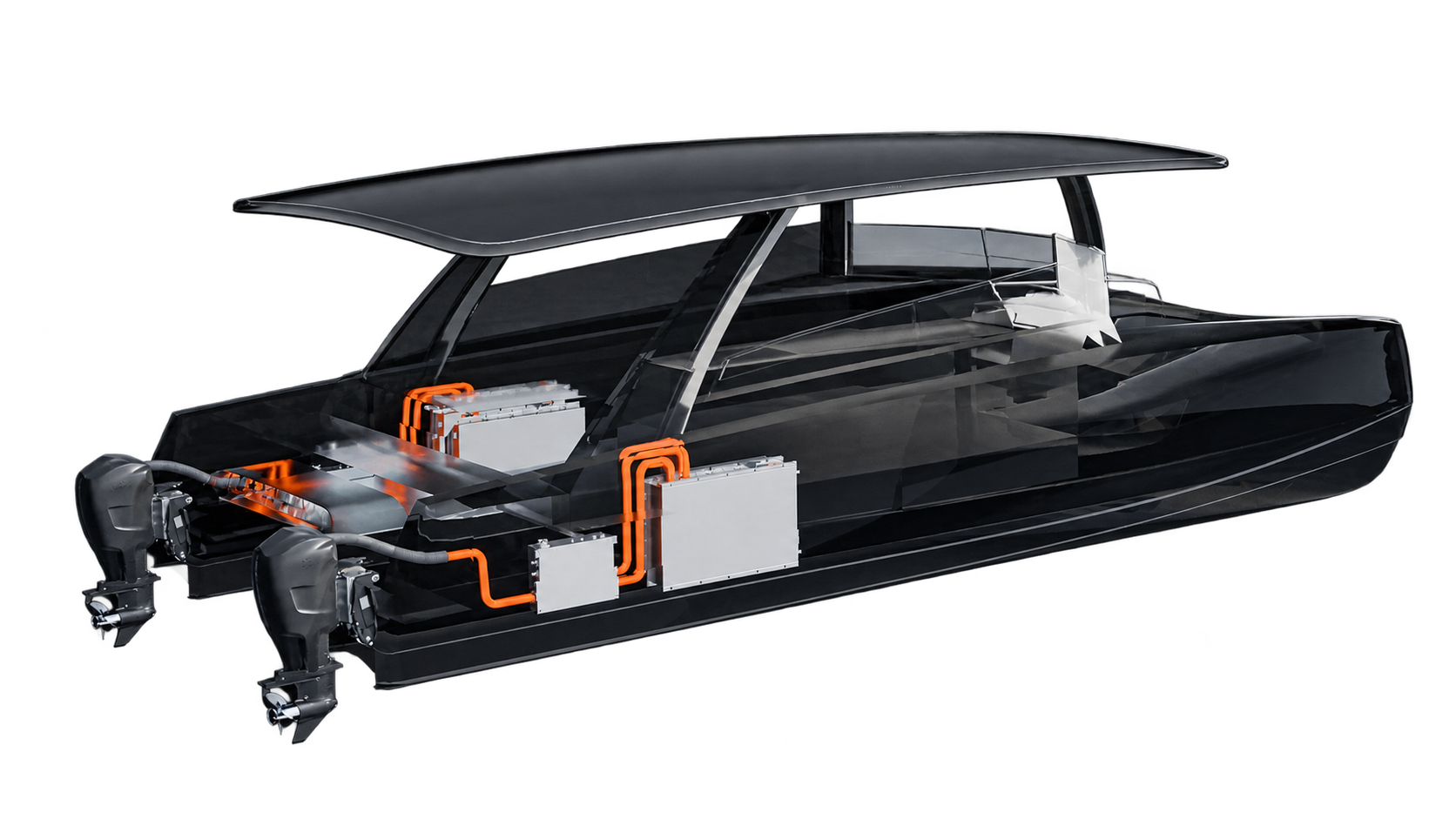
London's river just crossed a line most cities have not reached yet. In December 2025, Uber Boat by Thames Clippers launched Orbit Clipper, Britain's first fully electric zero-emission passenger ferry, on the Rotherhithe to Canary Wharf crossing, with Mayor Sadiq Khan at the unveiling. It was targeted to become the exclusive vessel on that route from spring 2026. Vessels on the Thames still account for roughly 1 percent of London's entire atmospheric emission inventory, according to the Port of London Authority's Thames Vision 2050, and the Mayor has set London a target of zero carbon by 2030.
That combination, real regulatory pressure and a visible flagship project already on the water, is why zero-emission marine transport in London has stopped being a future conversation and started being a procurement decision. This guide is for operators, resort and hospitality buyers, and anyone weighing a fleet decision on the Thames or a London dock right now. It covers the policy driving the shift, what real vessels and projects already exist, what a switch actually costs and requires, and why the manufacturing side of this story, not just the boats themselves, is increasingly based in East London.
What Counts as Zero-Emission Marine Transport in London?
Zero-emission marine transport in London means vessels with no tailpipe emissions during operation, typically battery-electric or solar-electric craft, as distinct from hybrid vessels that still burn fuel outside central zones. The Port of London Authority tracks this distinction directly in its Thames Vision 2050 and Net Zero River Plan.
The distinction matters more than it sounds. Uber Boat by Thames Clippers' existing hybrid fleet, Earth Clipper, Celestial Clipper, and Mars Clipper, runs on battery power through central London and recharges using biofuelled power outside that zone, cutting emissions by up to 90 percent according to Maritime Executive's coverage of the fleet. That is a genuine improvement, but it is not zero-emission in the way Orbit Clipper is, since Orbit Clipper carries zero tailpipe emissions throughout its entire service, not just the central stretch.
For an operator or buyer, this distinction should shape procurement language directly. Ask any builder or supplier whether a vessel is zero-emission throughout its full route or only within a defined zone, since the two are marketed almost identically but represent very different engineering and very different long-term compliance positions as London's targets tighten.
Why Is London Pushing Zero-Emission Vessels Now?
London is pushing zero-emission vessels because of stacked regulatory targets: the Mayor's zero carbon city goal for 2030, the Port of London Authority's Net Zero by 2040 commitment, and the UK's legally binding national Net Zero target for 2050, combined with an Air Quality Strategy that requires a 95 percent NOx and particulate matter reduction for inland Thames vessels.
The policy stack, in order
Three separate targets are converging on the same river at once. The Mayor of London is targeting a zero carbon city by 2030, the International Maritime Organization's short-term measures aim to cut ships' carbon intensity by at least 40 percent by 2030, and the Port of London Authority has committed to Net Zero for its own operations by 2040 or earlier, according to the PLA's Thames Vision 2050 priorities page. The PLA's Air Quality Strategy for the tidal Thames, updated in 2020, sets NOx and particulate matter reduction targets of 95 percent for inland vessels and 70 percent for deep sea shipping.
The financial incentives already in place
The PLA runs two schemes that make cleaner vessels a commercial decision rather than a purely ethical one. The Green Tariff, live since 2017, gives seagoing vessels a 10 percent discount on conservancy charges for scoring 30 or above on the Environmental Ship Index, doubled to 20 percent from 2020 for scores of 50 or above, according to the PLA's own Green Tariff page. The Thames Green Scheme, for inland operators, works differently: it is a free, tiered recognition scheme running from bronze up to platinum based on environmental performance, giving participating operators a marketing endorsement and access to partner discount offers rather than a direct reduction in PLA charges. The PLA achieved an 83 percent decrease in its own Scope 1 and 2 emissions between 2014 and 2023, largely by shifting its own fleet from diesel to sustainably sourced HVO, demonstrating the pathway it is now asking operators to follow.
What the data actually shows about feasibility
The Electric Thames project, led by UK Power Networks with Marine Zero, LCP Delta, ev.energy, and the PLA, and funded through Ofgem and Innovate UK's Strategic Innovation Fund, analysed 62 commercial vessels on the Thames and found their combined annual energy use equivalent to roughly 10 million litres of diesel, according to Marine Zero's account of the project's completed Alpha Phase. The project's headline conclusion is that Thames vessel electrification is technically and commercially feasible now, not a distant prospect.
What Zero-Emission Vessels Already Operate on the Thames?
Orbit Clipper, launched in December 2025 by Uber Boat by Thames Clippers, is the Thames's first fully electric passenger ferry, alongside a fully electric workboat already delivered and licensed under the Port of London Authority's Net Zero River Plan, plus a growing fleet of hybrid high-speed passenger vessels.
The flagship example: Orbit Clipper
Orbit Clipper is a 25-metre, 150-passenger, 100-bicycle vessel with a maximum speed of 12 knots, built by the Isle of Wight's Wight Shipyard Company with naval engineering from Beckett Rankine and charging infrastructure from Aqua superPower, according to Maritime Executive. It runs the Rotherhithe to Canary Wharf crossing roughly every 10 minutes on weekdays, part-funded by the Department for Transport and Innovate UK, and was projected to ferry more than 20,000 passengers a day once fully operational. It was expected to fully replace the diesel ferry Twinstar on that route from spring 2026.
Beyond the headline ferry
The PLA's Net Zero River Plan documents a fully electric workboat already delivered and licensed for use on the Thames, alongside hybrid passenger vessels and construction of fully electric berths, according to the PLA's February 2024 announcement of the plan. This matters because it shows electrification on the Thames is not limited to one high-profile commuter route. It is happening across workboats, berths, and passenger services at the same time.
Zero-Emission Marine Transport Compared: What's Actually Running vs What's On the Way
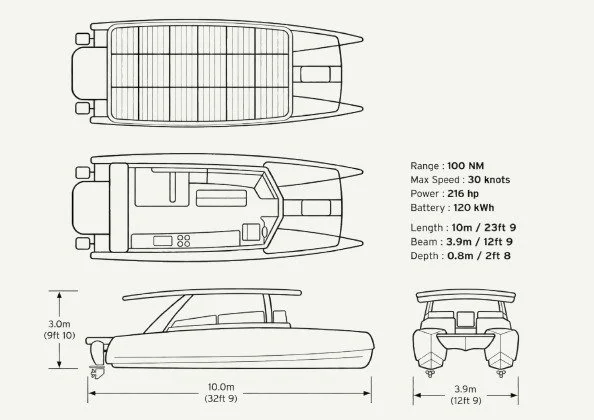
London's zero-emission marine fleet ranges from fully operational passenger ferries to bespoke solar-electric excursion and charter vessels being built in East London for this market.
Case Study: How Orbit Clipper Went From Funding Bid to Daily Service
Orbit Clipper moved from a Department for Transport and Innovate UK part-funded project to full daily passenger service on the Thames within a few years, built by a British shipyard rather than imported, and was on track to fully replace a diesel vessel on a high-frequency commuter route from spring 2026.
The project brought together four separate specialists rather than one shipbuilder working alone: Wight Shipyard Company on the Isle of Wight built the vessel itself, Beckett Rankine handled maritime civil engineering, and Aqua superPower delivered the electric charging infrastructure, according to Uber Boat by Thames Clippers' own account of the launch. That multi-partner model, naval architecture, civil engineering, and charging infrastructure as separate specialisms brought together for one vessel, is now the template most London zero-emission marine projects follow rather than the exception.
The operational result speaks to genuine demand rather than a demonstration project. Once fully operational, Orbit Clipper was projected to carry more than 20,000 passengers daily on the Rotherhithe to Canary Wharf crossing alone, according to Maritime Executive's reporting, a route previously served by a single ageing diesel ferry. The relevance for any operator considering a similar move is the timeline: from part-funded pilot to daily commuter service with Mayoral backing took only a few years, not a decade.
Why Is East London Becoming a Hub for Zero-Emission Boat Building?
The Royal Docks, including Silvertown where Chorus is based, is London's only Enterprise Zone and is home to Albert Island, a mixed-use industrial and maritime development set to become the first new shipyard on the Thames in more than a century, according to the Royal Docks regeneration authority.
The regeneration context
Albert Island is planned as a modern, sustainable industrial and maritime hub combining mixed-use industrial, commercial boatyard, and marina facilities, positioned as the Royal Docks' maritime heritage carried into the future, according to the official Royal Docks development site. The wider Royal Docks programme is a multi-billion-pound regeneration effort spanning Silvertown, Royal Albert Dock, and Albert Island, with a five-year delivery plan reaffirmed by the Mayor of London covering thousands of new homes and jobs.
What this means for buyers weighing a local supplier
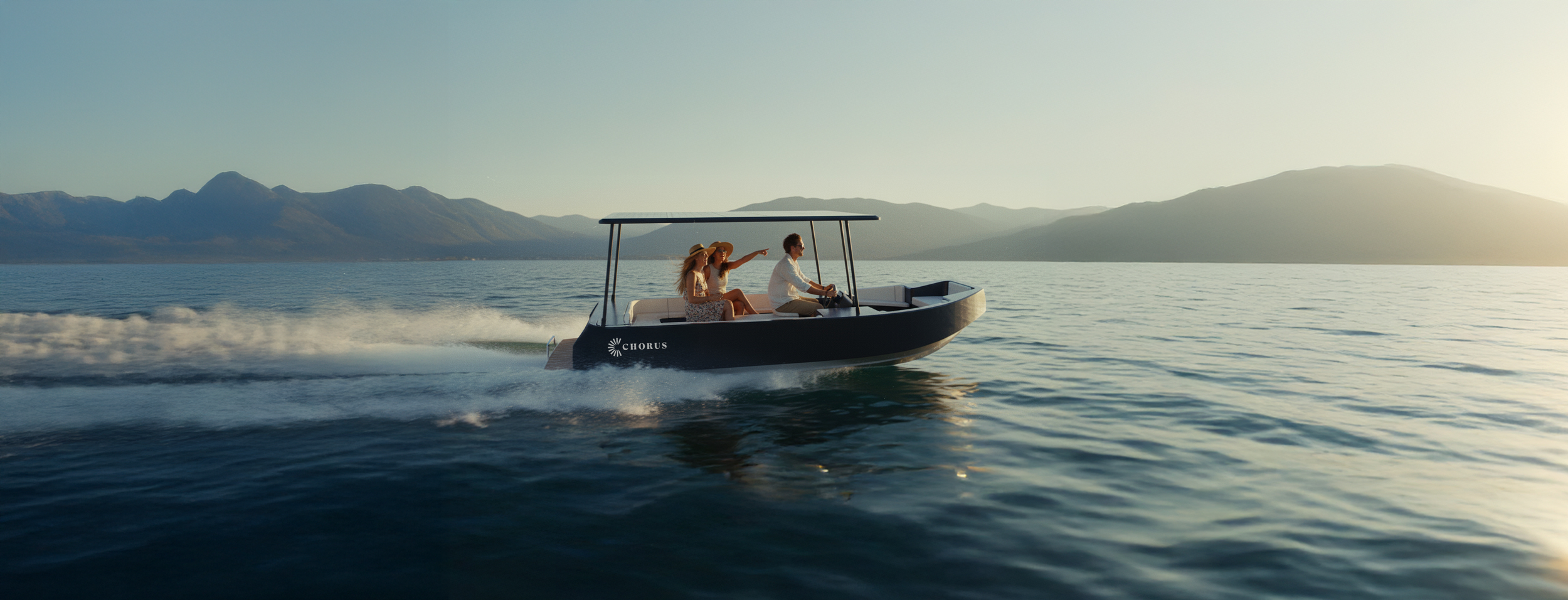
A resort, charter, or private buyer choosing a zero-emission vessel built in East London is not just buying a boat with a London postcode. They are buying into a river with active PLA financial incentives for cleaner vessels, a Mayor publicly attending zero-emission vessel launches, and a shipbuilding infrastructure programme under active development on the same stretch of river. Chorus operates from Silvertown in the Royal Docks, the same Enterprise Zone driving this regeneration, positioning its Duet catamaran and wider range as genuinely local manufacturing rather than an imported product with a UK sales office.
What Should an Operator Check Before Choosing a Zero-Emission Vessel in London?
Confirm whether a vessel is zero-emission for its entire route or only within a defined low-emission zone, check eligibility for the PLA's Green Tariff discount or Thames Green Scheme recognition tier, and ask any builder directly about UK-based manufacturing and naval architecture partners rather than assuming a London brand means a London-built vessel.
Ask about zone-limited versus full-route zero emission
As covered above, hybrid vessels like Thames Clippers' Earth, Celestial, and Mars Clipper cut emissions substantially but are not zero-emission for their full journey. A resort or charter operator whose entire route sits inside a future low-emission zone may find a hybrid vessel adequate. One running longer or mixed routes needs the fully electric or solar-electric distinction confirmed in writing.
Check PLA scheme eligibility before budgeting
The Green Tariff gives seagoing vessels a 10 to 20 percent discount on conservancy charges depending on Environmental Ship Index score, a direct PLA fee reduction. The Thames Green Scheme works differently: it is a free, tiered environmental recognition scheme for inland operators rather than a fee discount itself, though it opens access to a growing list of partner incentive offers. Confirm current scoring thresholds and any updated figures with the PLA directly before budgeting, since scheme details are periodically reviewed.
Frequently Asked Questions
-
Not a formal regulatory zone in the way London's road ULEZ operates, but Uber Boat by Thames Clippers' hybrid vessels switch to battery-only power specifically within central London and recharge outside it, an operational practice rather than a legal boundary. The Port of London Authority's Air Quality Strategy sets reduction targets across the whole tidal Thames rather than a single zone.
-
Orbit Clipper, operated by Uber Boat by Thames Clippers, became Britain's first fully electric, zero-emission passenger ferry when it entered service in December 2025 on the Rotherhithe to Canary Wharf crossing, according to Maritime Executive. It was targeted to become the exclusive vessel on that route from spring 2026, fully replacing the diesel ferry Twinstar.
-
Vessels on the Thames provide roughly 1 percent of London's atmospheric emission inventory, according to the Port of London Authority's Thames Vision 2050. That is a smaller share than road transport, but the PLA treats it as a genuine reduction opportunity given the concentrated, trackable nature of river traffic compared with the wider road network.
-
Yes, in two different forms. The Green Tariff gives seagoing vessels a 10 percent discount on conservancy charges for an Environmental Ship Index score of 30 or above, doubled to 20 percent for a score of 50 or above. The Thames Green Scheme, for inland operators, is a free tiered recognition scheme rather than a direct fee discount, though it gives participants a marketing endorsement and access to partner incentive offers.
-
Chorus operates from Silvertown in the Royal Docks, East London, the same Enterprise Zone where the Albert Island development is set to become the first new shipyard on the Thames in over a century. This places Chorus inside the physical regeneration and manufacturing corridor driving London's zero-emission marine transport shift, not simply a company using a London address for marketing.
-
Yes, typically dedicated shore power or fast-charging infrastructure, which is exactly what projects like the Electric Thames initiative and Orbit Clipper's Aqua superPower-built charging system have been developed to provide. The Port of London Authority has also targeted developing a zero emission berth, contingent on technological and financial feasibility, as part of its Thames Vision 2050.
-
No confirmed ban date exists as of 2026. The PLA's approach so far has been incentive-based, through the Green Tariff discount and Thames Green Scheme recognition tiers, rather than a fixed prohibition. The PLA's own Net Zero Plan confirms a 2040 (or earlier) target for its own operations, and it already cut emissions 50 percent three years ahead of its original 2025 target, largely by moving its fleet from diesel to sustainable biofuel. That, combined with the Mayor's 2030 zero carbon city target, creates clear long-term pressure toward phasing out diesel, but neither the PLA nor the Mayor has set a fixed cut-off date for commercial vessels.
The River Is Moving Faster Than Most Operators Realise
A few years ago, a fully electric, zero-emission passenger ferry carrying 150 people across the Thames every ten minutes was a funding proposal. Today it is Orbit Clipper, running a live commuter route with Mayoral backing. That pace is the real story here, not any single vessel.
Operators and buyers weighing a zero-emission fleet decision on the Thames or a London dock should check the PLA's current scheme eligibility, confirm whether a builder is genuinely UK-manufactured rather than London-branded, and ask for zero-emission claims to specify full route or zone-limited operation in writing. The Royal Docks, where Chorus builds its solar-electric range, is not a marketing backdrop for this shift. It is one of the places actually building it.
For operators and buyers evaluating a genuinely East London-built solar-electric vessel for resort, charter, or private use, Chorus is based in Silvertown, inside the same Royal Docks Enterprise Zone driving this regeneration. Get in touch to discuss your route and passenger requirements directly.
